
For most households, the family home is the single largest financial asset. Yet, despite its importance, property maintenance is frequently treated as a series of unfortunate surprises rather than a predictable business expense. A Home Maintenance Fund transforms these erratic financial shocks into a manageable monthly line item, ensuring that the integrity of the building is preserved without compromising the family's broader financial stability.
The Financial Reality of Property Upkeep
Homeownership comes with an implicit promise: things will eventually break. Roofs have lifespans, HVAC systems degrade over a decade, and appliances possess finite operational cycles. Without a dedicated fund, families often resort to high-interest credit or dip into emergency reserves that were intended for medical crises or job loss. By establishing a specific sinking fund for the house, it is possible to treat these events as scheduled maintenance rather than emergencies.
Standard Estimation Methodologies
Calculating how much to set aside requires a balance between mathematical rules of thumb and the specific realities of the property. Several proven methods help determine the appropriate monthly contribution.
- The 1% Rule: Save one percent of the home's total purchase price annually. A $400,000 home requires a $4,000 annual fund, or approximately $333 per month.
- The Square Foot Rule: Set aside $1 per square foot of living space every year. This works particularly well for larger homes in lower-cost real estate markets.
- The Age Adjuster: For homes older than 20 years, experts suggest increasing the 1% rule to 2% or 3% to account for aging plumbing, electrical, and structural components.
How to Implement Your Maintenance Strategy
Building the fund is a process that benefits from automation and clear categorization. Follow these steps to establish a resilient maintenance buffer.
- Open a Dedicated Account: Create a separate high-yield savings account exclusively for home repairs to prevent the funds from being spent on flexible lifestyle categories.
- Identify High-Cost Components: Audit the age of major systems like the water heater, roof, and heating unit. Research their average replacement costs to understand the total "liability" of the home.
- Set Up Automatic Deposits: Synchronize transfers with your paycheck. Even a small starting amount of $50 per month builds the habit of treating the house as a recurring commitment.
- Prioritize Structural Integrity: Use the fund first for issues that cause secondary damage, such as leaks or electrical faults, before allocating money to cosmetic upgrades like paint or flooring.
Seasonal vs. Capital Expenditures
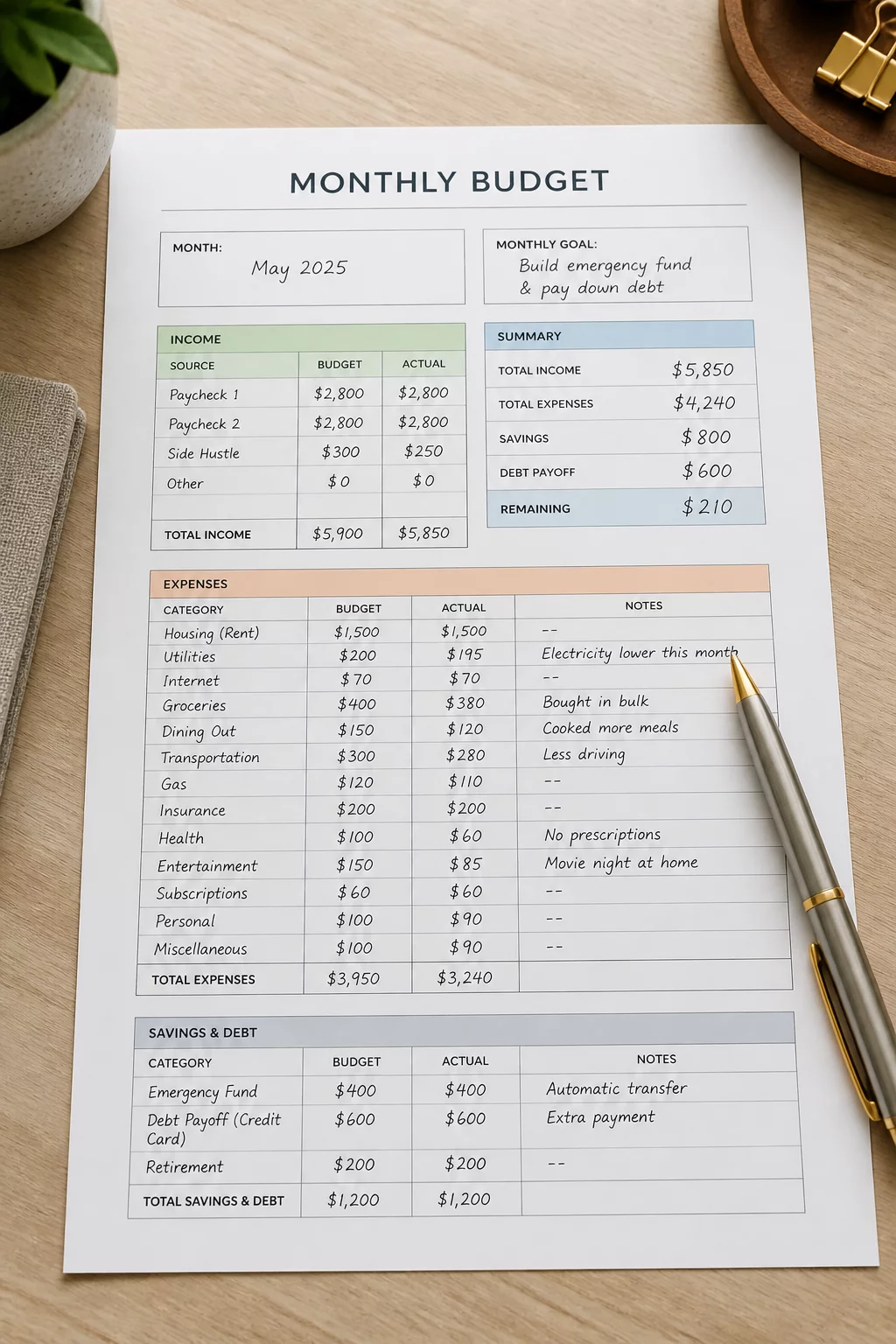
It is helpful to distinguish between seasonal upkeep and long-term capital projects. Seasonal tasks, such as gutter cleaning or pest control, are recurring expenses that should ideally be part of the monthly budget worksheet. The Maintenance Fund, however, should be reserved for larger "capital" events—the $10,000 roof replacement or the $5,000 foundation repair. Maintaining this distinction prevents the fund from being drained by small, predictable errands, keeping the bulk of the capital ready for significant structural needs.

Editorial Discussion
No comments yet. Be the first to leave a comment.
Join the conversation