Mastering Your Monthly Cash Flow
Success in household finance begins with a clear map of where every dollar goes. The monthly budget worksheet serves as your primary tool for financial visibility, allowing you to move from reactive spending to proactive wealth management. By documenting income and expenses, you gain the power to identify leaks and prioritize what truly matters to your family.
Breaking Down Your Monthly Worksheet
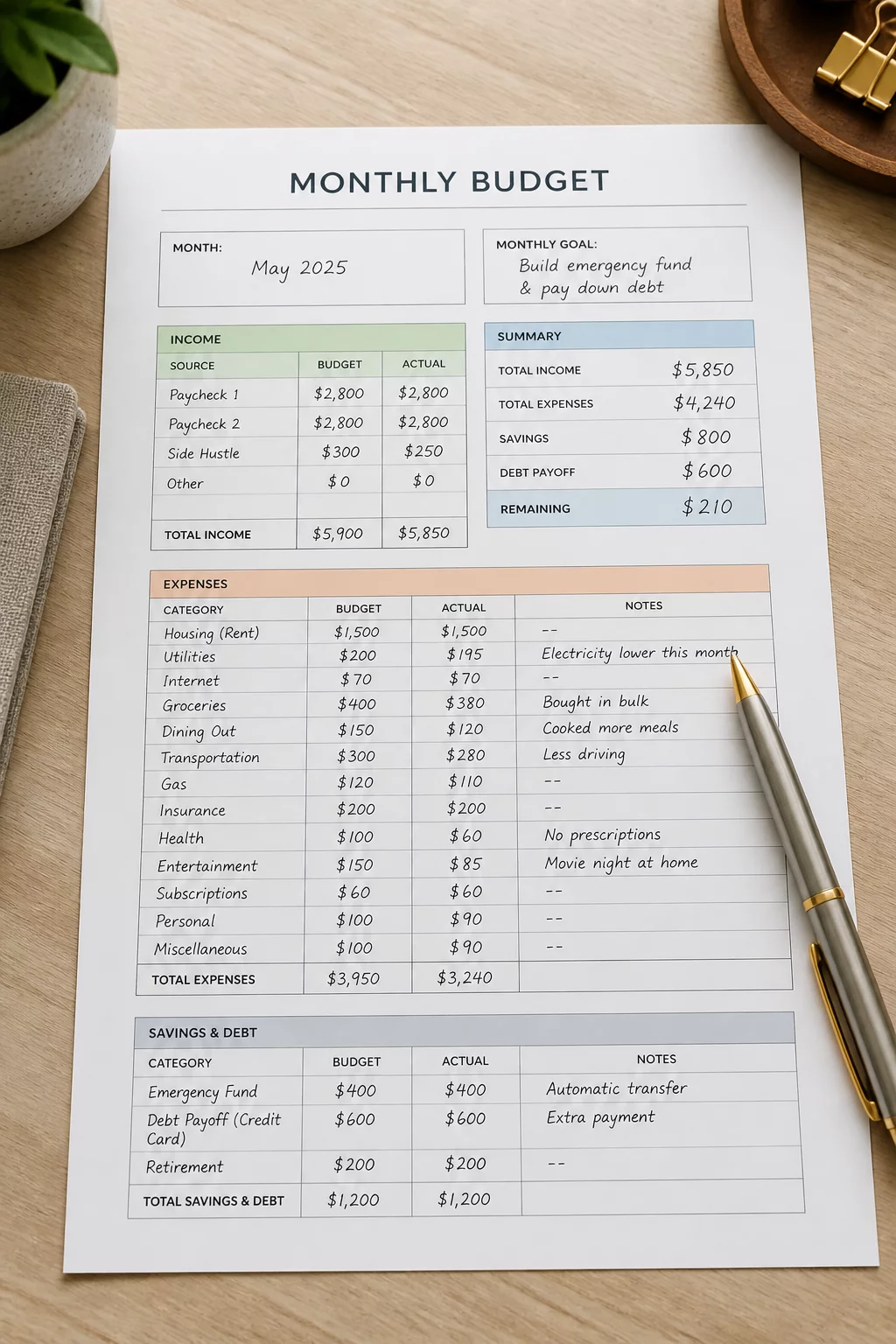
A functional worksheet is divided into three critical zones. First, the Income Tracker records all sources of household revenue, from primary salaries to side gig earnings. Second, the Fixed Expenses column covers non-negotiable costs like mortgage payments, insurance, and utilities. Finally, the Variable Spending section tracks fluid categories such as groceries, entertainment, and transportation.
Step-by-Step Implementation Strategy
Begin by gathering your financial statements from the previous 30 days. It is often surprising to see the cumulative effect of small, recurring purchases. Use the worksheet to categorize these historical expenses before setting targets for the upcoming month. This retrospective analysis provides a realistic baseline for your future financial goals.
- Audit Recurring Costs: Look for unused subscriptions or memberships that can be cancelled immediately to free up cash flow.
- Analyze Grocery Habits: Determine if bulk buying or meal planning could reduce this high-frequency variable expense.
- Buffer for Seasonal Shifts: Account for utility spikes in winter or summer months within your worksheet to avoid surprises.
- Prioritize Emergency Savings: Treat your savings contribution as a fixed expense that must be paid first every month.
The final stage of using your monthly worksheet involves the difference calculation. Subtract your total expenses from your total income. A positive number indicates a surplus that can be directed toward long-term savings or debt repayment. If the number is negative, use the categorized data to decide which variable expenses to prune first without impacting your quality of life.


Editorial Discussion
This could be your first comment. Share your perspective on budget planning below.
Join the conversation