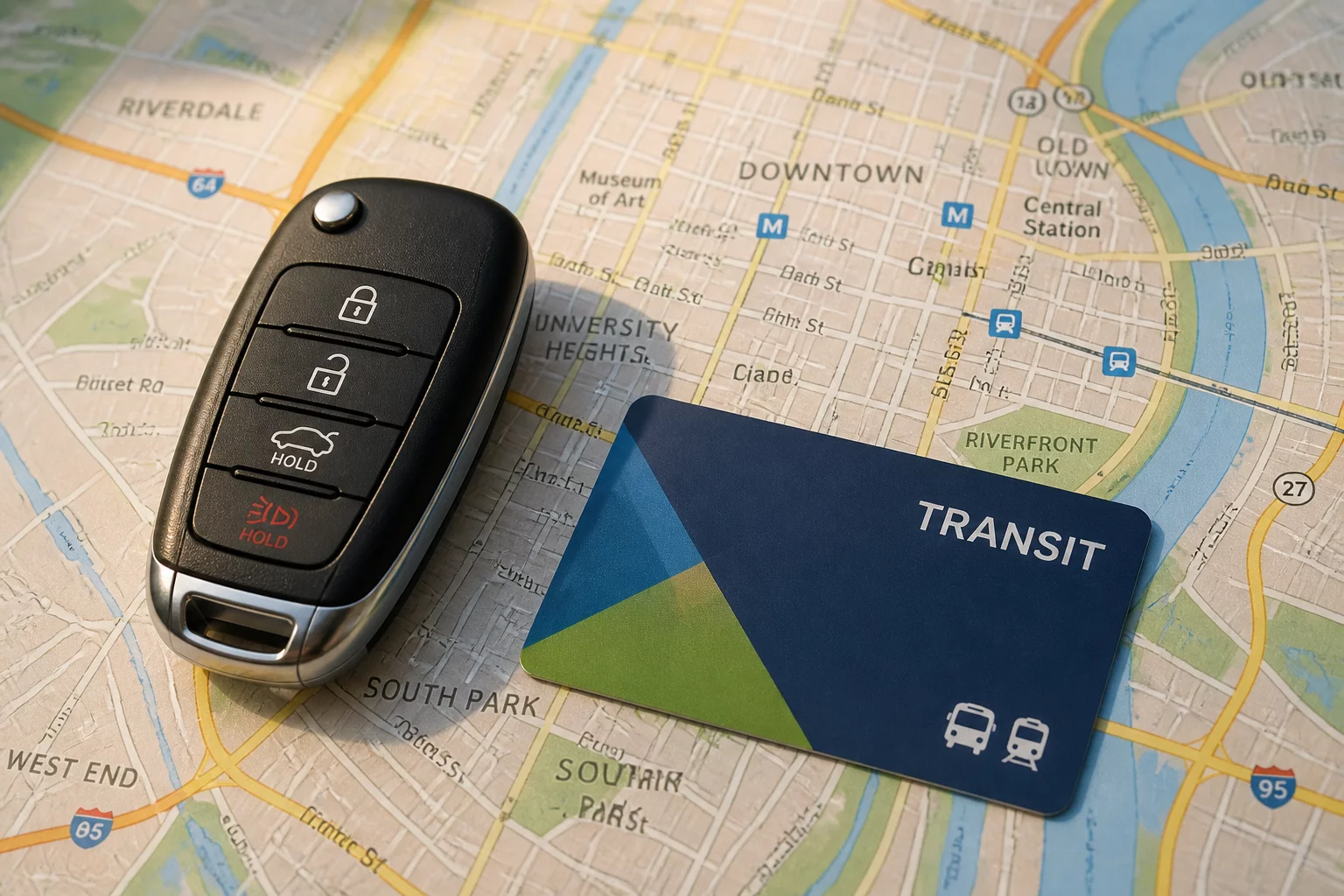
For most households, transportation is the second largest expense after housing. However, because these costs are often spread across gas stations, insurance premiums, and sporadic repair bills, the true monthly total remains hidden. Evaluating your commute cost isn't just about fuel; it's about the depreciation of your asset and the irrevocable loss of your time.
The Silent Cost: Vehicle Depreciation
Every mile you drive to the office strips value from your car. While fuel is a visible daily transaction, depreciation happens quietly in the background. A standard commute of 30 miles round-trip adds 7,500 miles annually to your odometer just for work. Over five years, this usage can reduce your vehicle's resale value by thousands of dollars. When using our calculator, ensure you factor in at least $0.10 to $0.20 per mile for wear and eventual replacement.
Quantifying Your Time
Financial efficiency isn't solely about currency; it's about opportunity cost. If you spend 90 minutes a day commuting, that equals roughly 375 hours a year—nearly 16 full days spent in a driver's seat. Many financial planners suggest assigning a dollar value to this time, perhaps half of your hourly wage, to truly see what the commute is costing your lifestyle and potential earning power.
Direct Expenses Breakdown
- Fuel Costs: Calculated based on average MPG and current local prices.
- Tolls and Parking: These fixed costs often outweigh fuel in urban environments.
- Maintenance: Routine oil changes, tire rotations, and brakes necessitated by high mileage.
- Insurance Premiums: Many providers offer lower rates for low-mileage drivers who work remotely.
Understanding the total cost of your commute provides the leverage needed to negotiate for remote work days or to consider alternative transportation methods that could save your household over $5,000 annually.
Evaluating Alternatives
Once the math is clear, the shift to public transit, cycling, or carpooling often makes undeniable financial sense. A transit pass might seem expensive at $100 per month, but when compared to a $600 comprehensive car commute cost, the savings can be redirected toward retirement funds or mortgage acceleration. It is rarely just about the convenience; it is about the long-term health of your budget.


Editorial Discussion
No comments yet. Be the first to leave a comment.
Join the conversation