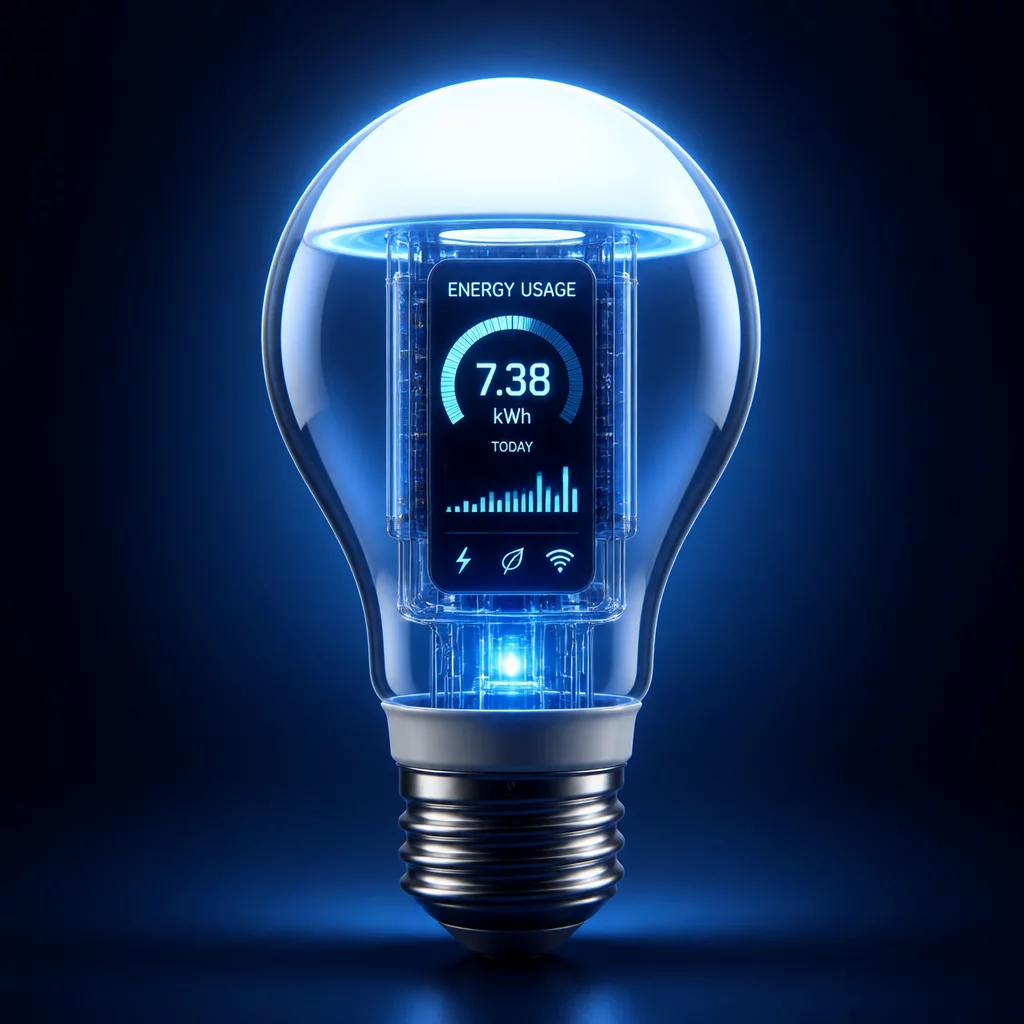
Identifying the exact cost of running individual appliances remains a fundamental step in mastering household cash flow. While utility bills provide a total sum, they rarely break down which device consumes the most electricity. By using a systematic calculation approach, you transform vague overhead costs into actionable data points. This process starts with understanding the power rating of each unit, usually measured in watts, and estimating the daily hours of operation.
The Core Calculation Formula
To determine the daily and monthly expense of any appliance, you must convert the wattage into kilowatt-hours (kWh). Electricity providers bill you based on this specific unit. Use the following sequence to reach your final number:
- Multiply the device wattage by the number of hours it runs per day.
- Divide that product by 1,000 to find the daily kilowatt-hours (kWh).
- Multiply the daily kWh by your local utility rate per kWh.
- Extend this by 30 for a monthly estimate or 365 for a yearly projection.
For instance, a 1,200-watt hair dryer used for 15 minutes daily (0.25 hours) consumes 0.3 kWh. If your rate is $0.15 per kWh, that specific activity costs roughly $0.045 per day or $16.42 per year.
Average Appliance Power Ratings
Standard household items vary significantly in their energy demands. Knowing these benchmarks helps you prioritize which habits to change first. Large cooling systems and heat-generating tools typically sit at the top of the spectrum.
| Appliance Type | Typical Wattage Range | Primary Cost Impact |
|---|---|---|
| Central Air Conditioner | 3,000 – 5,000 W | Extreme (Seasonal) |
| Water Heater (Electric) | 4,500 W | High (Constant) |
| Refrigerator (Modern) | 100 – 200 W | Moderate (24/7 Run) |
| Laptop Computer | 50 – 100 W | Low |
Strategies for Enhancing Budget Efficiency
Once you have identified the heavy hitters in your home, apply these targeted steps to reduce the financial impact. Focus on high-wattage items and those that run continuously.
- Shift high-energy tasks, like running the dishwasher or laundry, to off-peak hours if your utility provider offers time-of-use rates.
- Clean refrigerator coils and replace air conditioner filters every three months to ensure motors do not overwork and draw excess power.
- Implement smart power strips for entertainment centers to eliminate "vampire loads"—the energy consumed by devices in standby mode.
- Lower the thermostat on your water heater to 120°F (49°C) to reduce the baseline energy needed for thermal maintenance.
The Importance of Precise Measurement
Generic tables provide a solid starting point, but actual consumption often differs due to appliance age, efficiency ratings, and usage patterns. If you want absolute precision for your Household Workbook, consider investing in a plug-in energy monitor. These devices sit between the wall outlet and the appliance, logging real-time consumption data. Tracking a refrigerator over a 24-hour cycle with a monitor often reveals surprising patterns in compressor cycles that a simple estimate might miss.


Editorial Discussion
No comments yet. Be the first to leave a comment.
Join the conversation