Effective household management starts with clear, structured data. The HouseholdPulse Workbook is more than a simple set of tables; it serves as a dynamic editorial framework designed to help families visualize their cash flow, identify waste, and plan for future stability. These guidelines provide the technical and conceptual foundation for utilizing the workbook to its full potential.
Getting Started with Your Financial Journal
To begin, it is essential to treat the workbook as a living document. The initial setup requires a honest assessment of your current financial standing. Start by populating the primary categories with your fixed monthly commitments—those non-negotiable costs such as housing, insurance, and utilities. By establishing this baseline, you create a mirror of your mandatory financial obligations before considering discretionary choices.
The Monthly Review Workflow
Regularity is the cornerstone of successful financial analysis. We recommend a structured three-stage cycle for every calendar month:
- Recording: Update your daily transaction logs. Whether you use digital exports or manual entry, capturing micro-expenses is vital for spotting hidden leakages.
- Categorization: Group expenses into the predefined editorial buckets. This allows the built-in logic of the workbook to generate accurate trend visualizations.
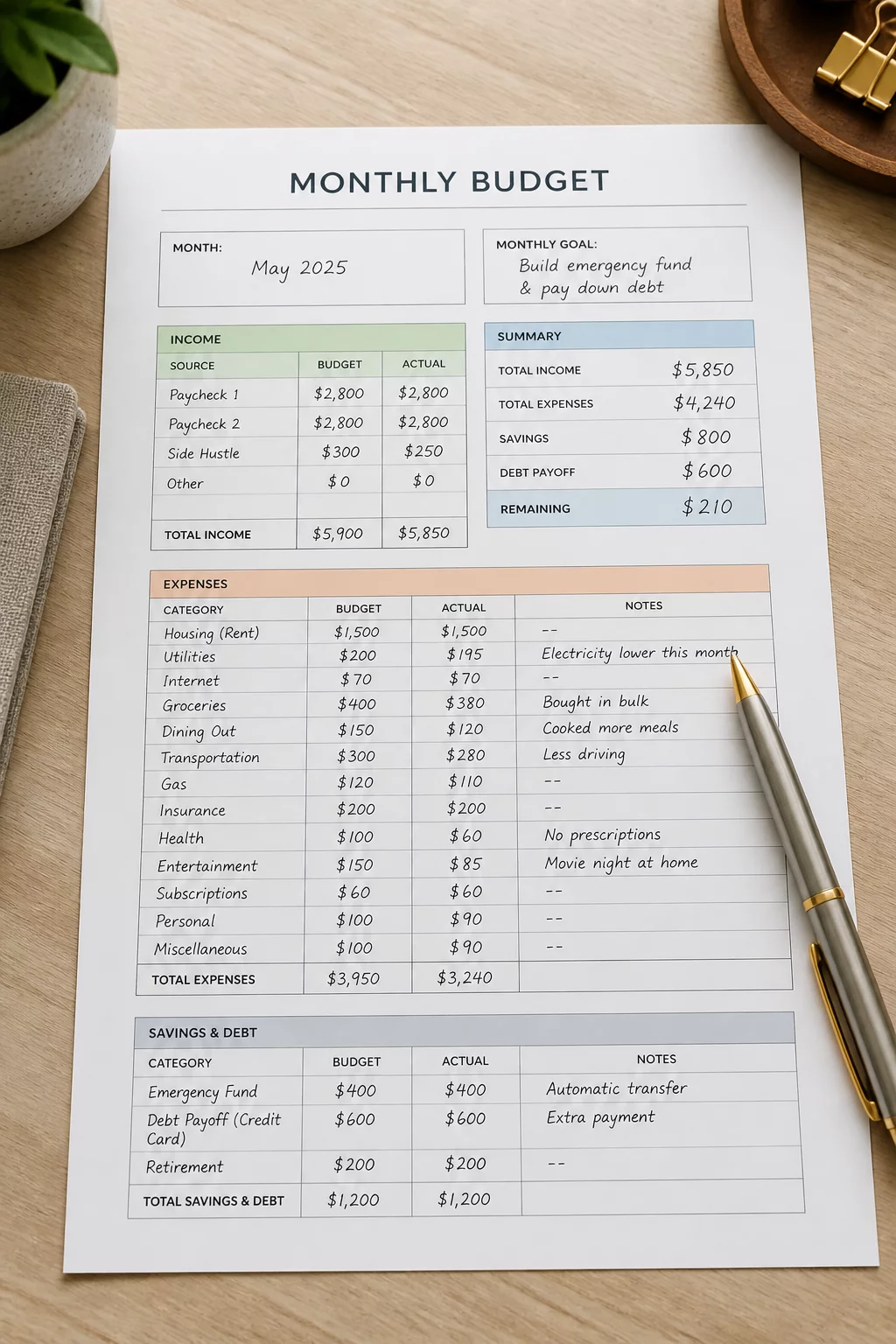
- Assessment: At the end of each period, review the comparison between planned vs. actual spending. This stage determines where adjustments are required for the following month.
Data Entry Best Practices
Accuracy in your workbook depends entirely on the quality of inputs. Avoid rounding numbers; even small discrepancies can compound over an annual review cycle. Use the 'Notes' column to add context to unusual transactions. A one-time repair cost for a vehicle should be marked as such, preventing it from skewing your perceived average transportation maintenance costs. Accuracy ensures that the analytical tools provide meaningful insights rather than noise.
Customizing Categories for Your Household
Every household operates differently. While the workbook provides a robust standard template, customization is encouraged. If your family prioritizes educational investments or hobby-related expenses, create specific sub-categories. This granularity makes the data actionable. Instead of a broad 'Leisure' category, splitting it into 'Dining Out' and 'Streaming Services' reveals exactly where behavioral changes can yield the highest savings.
Analyzing Trends and Adjusting Behavior
The true value of the HouseholdPulse Workbook manifests after three to six months of consistent use. Long-term trends emerge, showing seasonal fluctuations in utility costs or creeping inflation in grocery spending. Use these insights to negotiate better service rates or transition to bulk buying strategies. The objective is not merely to record history, but to write a better financial future through informed, data-driven decisions.


Editorial Discussion
This could be your first comment. Share your thoughts on our usage guidelines below.
Join the conversation